Technology
How Much 4G Data Does a Fleet Dashcam Use?
Tracking uses about 17 MB a month and live video about 40 to 60 MB per camera-hour. Our worked example for one van comes to about 1.1 GB a month.
By Kumar Saurabh, Head of Overseas Business, SKYWONDER
, 3 min read
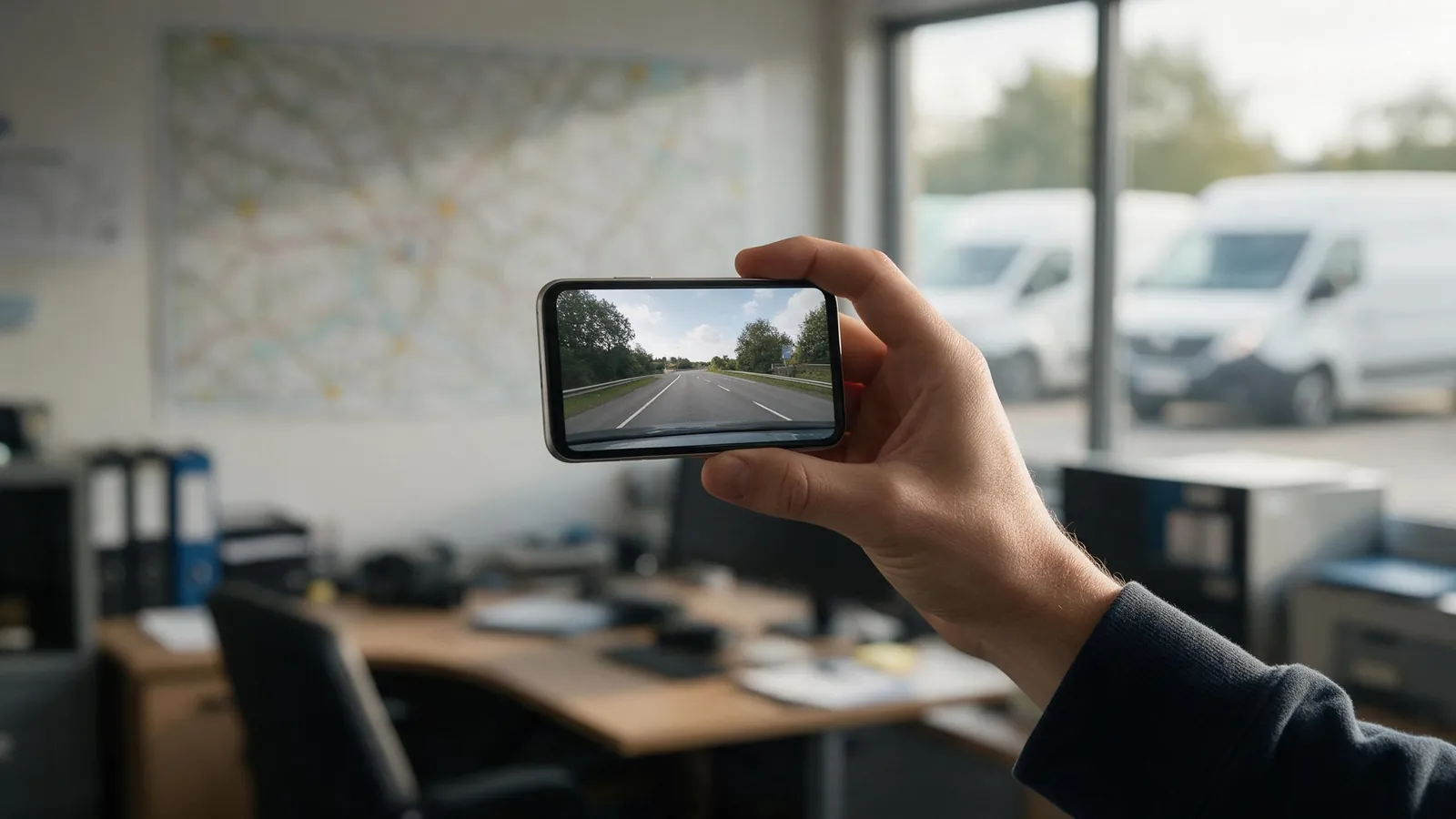
A 4G dashcam uses very little data until video leaves the vehicle, as live view or as uploaded clips. GPS tracking alone takes about 17 MB a month. Live view on the sub-stream takes about 40 to 60 MB per camera for every hour watched, and an uploaded 15-second event clip takes about 5.6 MB at 720p. Recording itself uses none, because the video is saved to the memory card in the vehicle.
These figures come from our own measurements on the recorders we build, on two carriers, and they are the ones behind our 4G data calculator. All of them are for H.264 video, in decimal units as carriers bill them.
What uses data, and what does not
| Activity | Data used |
|---|---|
| Recording to the memory card | None |
| GPS tracking and heartbeat | About 24 KB an hour at a 30-second interval |
| Live view, sub-stream | About 40 to 60 MB per camera per hour |
| Live view, 720p main stream | About 1.35 GB per camera per hour |
| Live view, 1080p main stream | About 1.8 GB per camera per hour |
| One uploaded 15-second clip | About 5.6 MB at 720p, 7.5 MB at 1080p |
Tracking: almost nothing
Each position report, with its heartbeat, is about 200 bytes. At the default interval of 30 seconds, that is 120 reports and about 24 KB an hour. A device that stays on all day, every day, uses about 17 MB a month for tracking. Shortening the interval to 10 seconds triples that, to about 52 MB.
Live view: the main cost per hour
A recorder encodes each camera twice. The main stream is the full-quality video saved to the card. The sub-stream is a smaller copy made for viewing over 4G. On the sub-stream we measured between 11 and 17 KB per second for each camera, depending on the carrier, which is about 40 to 60 MB an hour.
Watching the main stream remotely uses the recording bitrate: 3 Mbps at 720p and 4 Mbps at 1080p. That is 1.35 to 1.8 GB an hour for one camera, about 27 to 36 times the sub-stream at 50 MB. Use it when you need to read a number plate, not for routine checks.
Event clips
When an alarm fires, the device uploads a short clip. A clip is sent at the recording bitrate, so 15 seconds of 720p video is about 5.6 MB. Five clips a day over a 26-day month come to about 730 MB.
A worked example
One delivery van, working 10 hours a day for 26 days:
- Tracking at 30 seconds: about 6 MB.
- Live view on the sub-stream, one camera, 15 minutes a day: about 325 MB.
- Five 15-second 720p clips a day: about 730 MB.
That is about 1.1 GB a month (1,062 MB), and the clips use more than twice the data of the live view. With 20% headroom it is about 1.3 GB, so buy the next plan size up.
How to keep data use down
- Watch on the sub-stream, and one camera at a time.
- Upload short clips of events, not continuous video.
- Tune alarm sensitivity so the device does not upload clips of normal driving.
- Download long recordings over Wi-Fi when the vehicle is back at the depot.
Choosing the SIM
The SIM is not included, so you choose a local carrier. Check that the device covers the carrier's 4G bands: each dashcam's product page lists them, and the D9 and WD02 ship in regional versions. Then choose a data-only plan sized from the estimate above. To size the memory card as well, use the storage calculator.
Frequently asked questions
How much data does a 4G dashcam use per month?
Does a dashcam use data while recording?
How much data does live view use?
What data plan should I buy for a fleet dashcam?
Choosing cameras for a fleet?
Tell us your vehicles; an engineer suggests a setup.
Read next
Technology, Oct 1, 2026, 3 min read
JT/T 808 and JT/T 1078 Explained: Fleet Video Protocols
JT/T 808 carries position, alarms and commands between a vehicle device and a platform. JT/T 1078 adds video. Check the edition and the server protocol first.
Technology, Apr 27, 2025, 3 min read
Wired vs Wireless Dash Cams: Which One for a Fleet?
A wired dashcam keeps footage on its memory card. A wireless one adds Wi-Fi or 4G to get it off. A fleet that must see incidents as they happen needs 4G.
Buying guides, Oct 1, 2026, 3 min read
How Many Cameras Does a Truck, Bus or Van Need?
Vans and taxis need two cameras, trucks three or four and buses four to eight. Start from the views you would want after an incident.
Not sure which camera fits your fleet?
Tell us your vehicles and what you need to see. An engineer recommends a setup, usually within 2 hours.