
Camera systems for construction and heavy equipment
Machines work in dust, heat and vibration, often out of sight of any supervisor.
The short answer
Construction vehicles need a recorder built for a wide temperature range and cameras on the sides the operator cannot see. The WD10 MDVR operates from -20 °C to +70 °C, records four 1080p or eight 720p cameras to a hard disk and gives left and right blind-zone alarms. The AHD005 driver camera adds fatigue and helmet detection.
- Camera views
- 4 or more
- Recorder
- WD10 MDVR
- Storage
- Hard disk up to 2 TB, SD backup
What goes wrong, and what video changes
People near moving machines
Workers on foot are often beside or behind a machine, out of the operator's sight. Side cameras with blind-spot detection warn before a turn or a reverse.
Machines out of sight
Equipment works far from any supervisor. With the GPS module, geofence alerts show when a machine leaves the site, and video shows how it was used.
Heat, cold and vibration
The WD10 operates from -20 °C to +70 °C, takes 10–36 V with reverse-polarity and short-circuit protection, and uses locking aviation connectors that hold the camera cables against vibration.
Recommended camera layout
The WD10 MDVR, rated from -20 °C to +70 °C, records to a hard disk, with blind-spot cameras on the left and right of the machine and a camera on the operator.
| Position | Equipment | What it covers |
|---|---|---|
| Cab, facing forward | Forward AHD camera | The view ahead of the vehicle |
| Left and right of the body | BSD Cameras | Left and right blind zones, with alarms on the WD10 |
| Rear | Exterior AHD camera | Reversing and the area behind the machine |
| Cab, facing the operator | AHD005 DSM Camera | Fatigue, distraction and whether a hat or helmet is worn |
What this setup gives you
- Geofence alerts when a machine leaves the site
- Left and right blind-zone alarms
- Fatigue and helmet alerts for the operator
Products in this setup
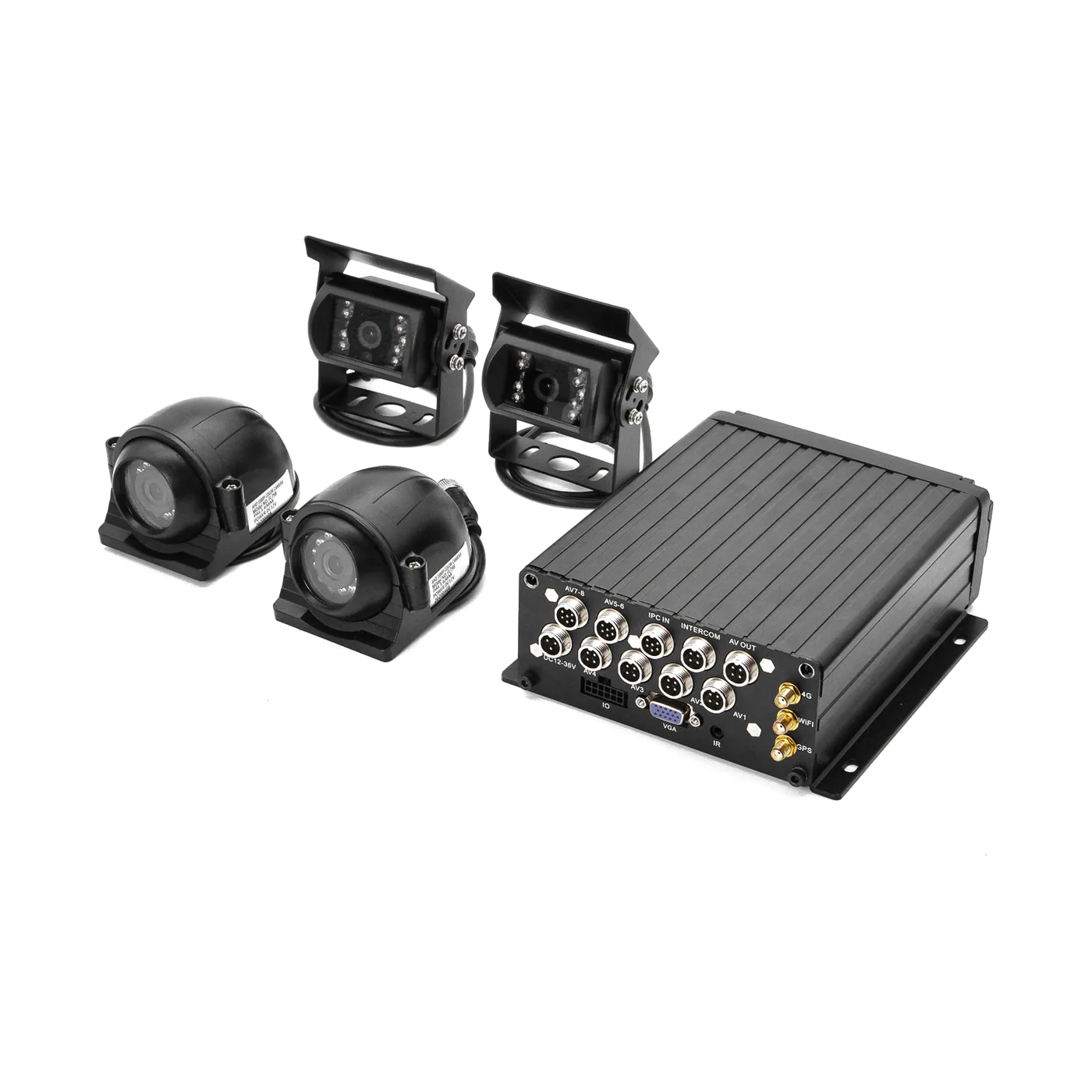 Hard-disk recorder, up to 2 TBWD10 AI MDVR4- or 8-channel AI MDVR with up to 2 TB HDD and optional 4G
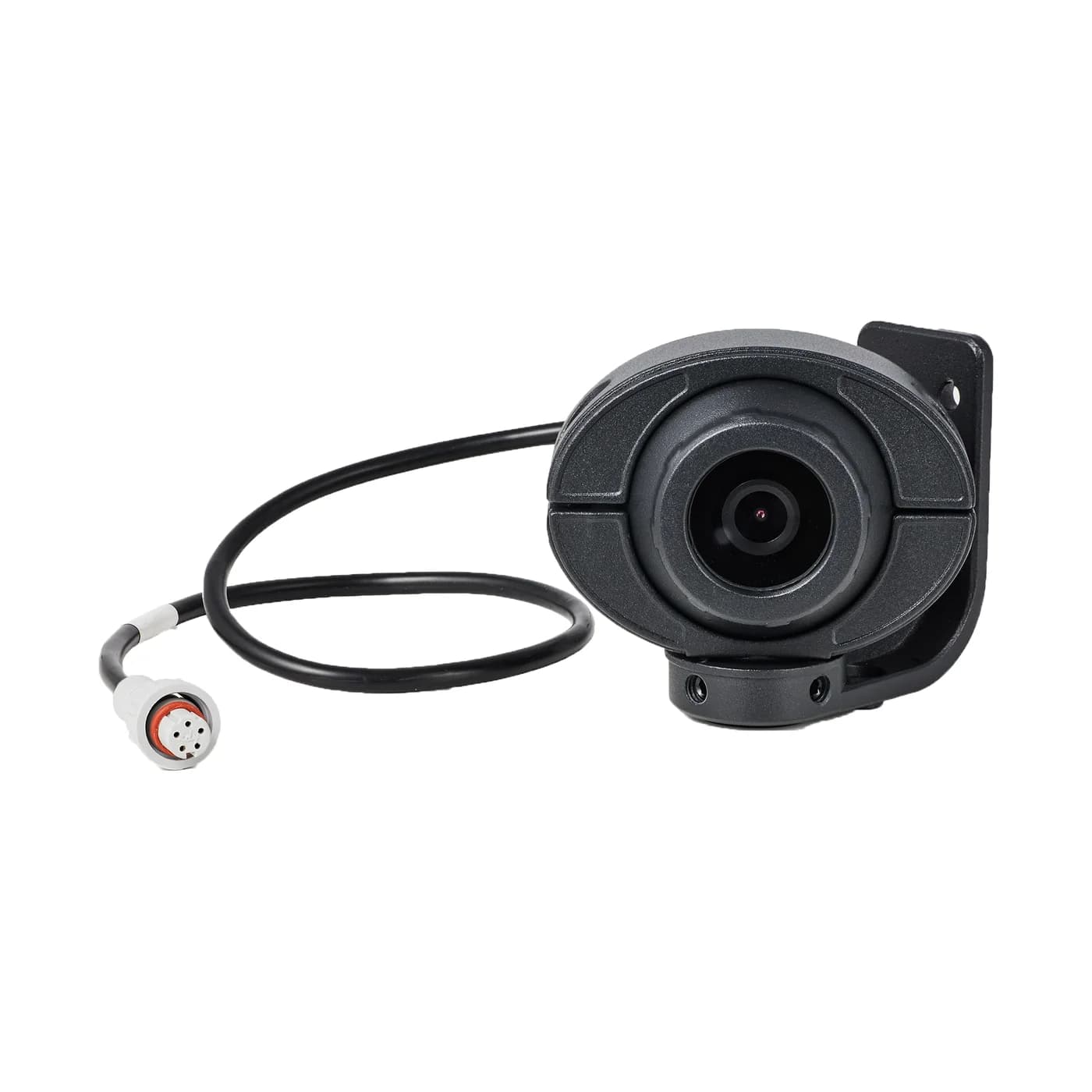 Left and right blind zonesBSD CameraSide-mounted 1080p blind-spot camera with night vision for MDVR
 Operator fatigue and helmet detectionAHD005 DSM Camera1080p infrared driver camera for fatigue, distraction and helmets
Storage and mobile data
How long footage is kept
This setup records 5 × 720p, about 6.8 GB an hour at standard quality. On a 2 TB hard disk, that is roughly 280 hours of recording before the oldest footage is overwritten, or about 550 hours in H.265, which the WD10 supports.
Storage calculatorHow much 4G data it uses
Recording uses no mobile data. Tracking uses about 17 MB a month at a 30-second interval. Watching all 5 cameras of this setup on the sub-stream for an hour uses about 200 to 300 MB. A 15-second event clip is about 5.6 MB at 720p or 7.5 MB at 1080p.
4G data calculatorBefore you order
- This layout has five cameras, so the WD10 is ordered in its eight-input configuration, which records each camera at 720p. With four cameras it records 1080p.
- Mount the recorder in a protected position, such as a cabinet or under a seat. An SD card of up to 256 GB keeps a backup.
- Recording does not need mobile coverage. 4G and GPS are optional modules on the WD10: order them for live view, alerts and geofences.
- Keep exterior lenses clean and check their angle after body repairs. For an exterior camera with its own recorder in an IP67 housing, see the S202; ask us about the ingress rating of the other cameras.
Construction camera questions
Can the cameras cope with heat, cold and vibration?
Can the system detect whether the operator is wearing a helmet?
Do machines without mobile coverage still record?
Does it work on 24 V machines?
Guides for this fleet
- ADAS, DMS and BSD Explained: What Each Fleet Camera Alert DoesADAS watches the road, DMS watches the driver and BSD watches the blind spot. Each needs its own camera, and our devices differ in the alerts they give.Read the guide
- How Many Cameras Does a Truck, Bus or Van Need?Vans and taxis need two cameras, trucks three or four and buses four to eight. Start from the views you would want after an incident.Read the guide
- Dashcam vs MDVR: Which Does Your Fleet Need?A dashcam is one windscreen unit with one or two lenses. An MDVR is a separate recorder for four or eight cameras. Choose by the views you need.Read the guide
Not sure which camera fits your fleet?
Tell us your vehicles and what you need to see. An engineer recommends a setup, usually within 2 hours.